Purity
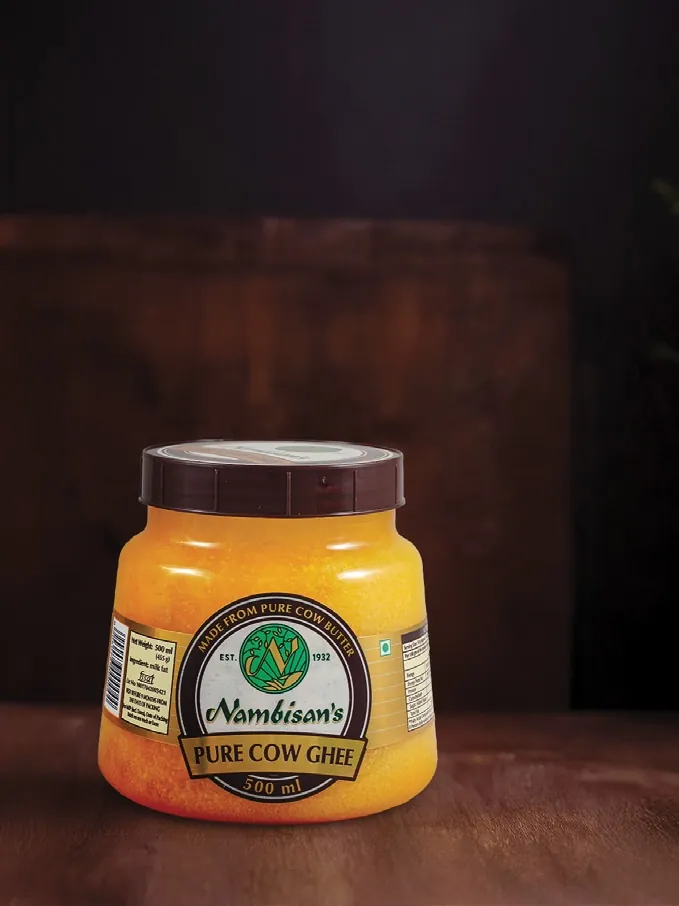
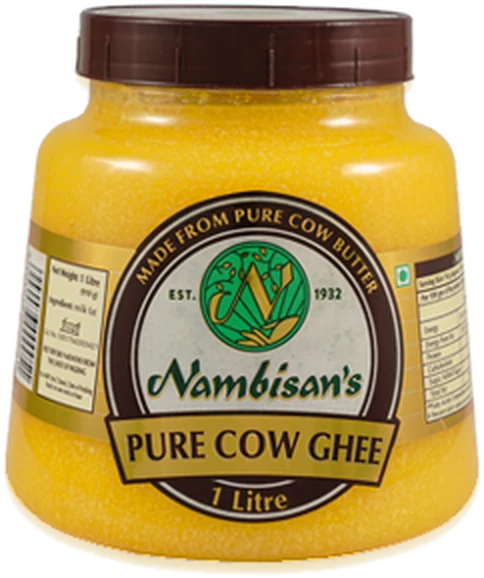
Made from pure cow butter, exactly as the jar says. The ingredient list has one entry: milk fat.
Made from the best of the dairy produce from the milk belt of South India, and simmered slowly until it is ready — not a minute before.




Scroll on — the picture follows the jar from butter to your table.
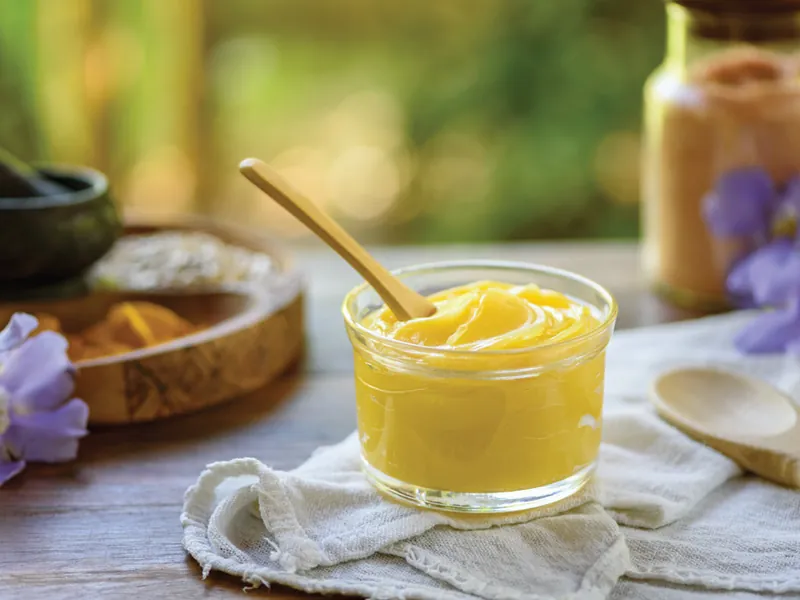
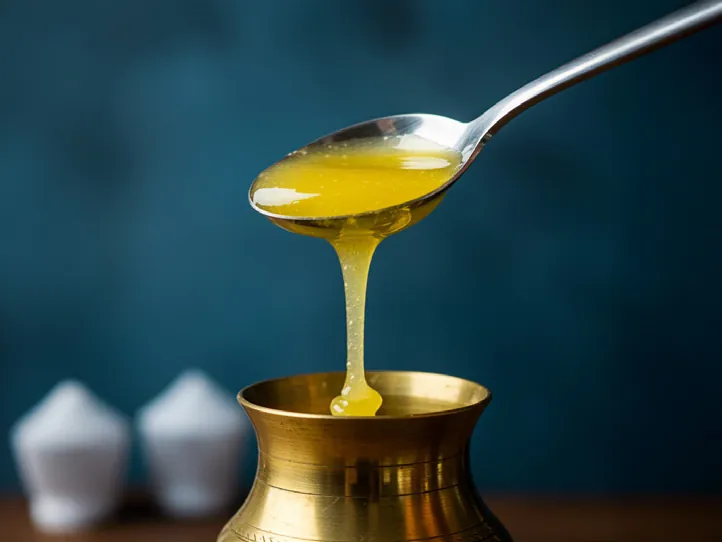
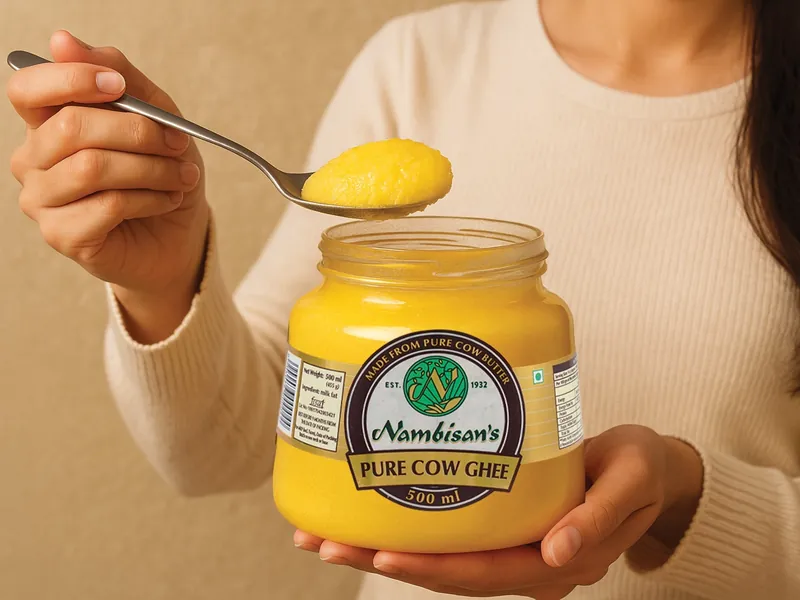
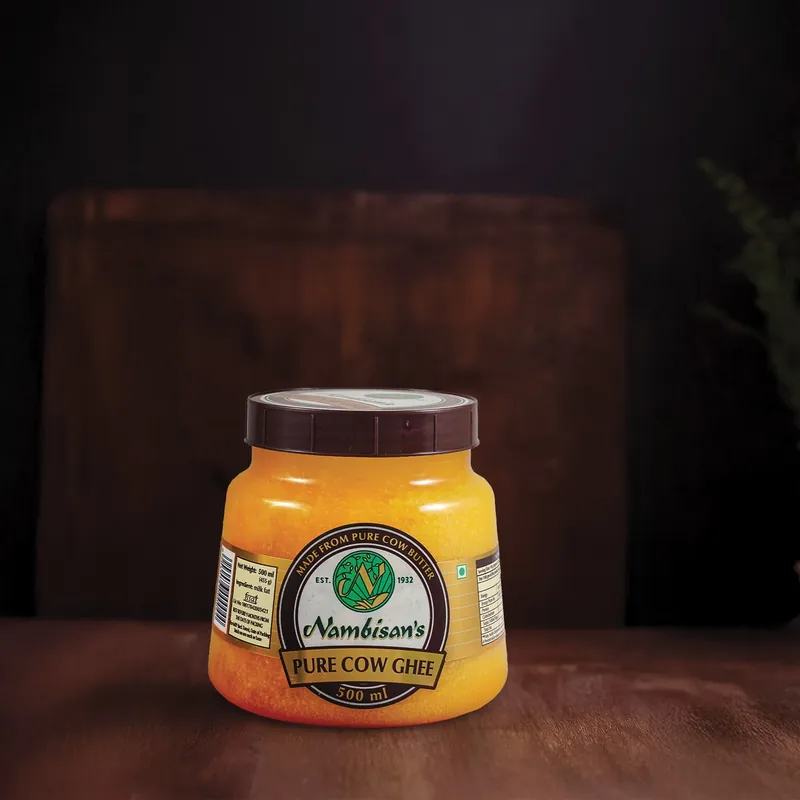
It starts with the best of the dairy produce from the milk belt of South India — pure cow butter, and nothing else.
The butter is heated gently over a slow flame and left to simmer — four days from butter to jar — until the milk solids turn gold and the aroma fills the room.
Filtered and left to cool at its own pace, the ghee settles into the fine, natural grain that tells you it was never rushed.
Tasted and tested at our Perundurai plant, then sealed with a batch number and best-before date — ready for your table.
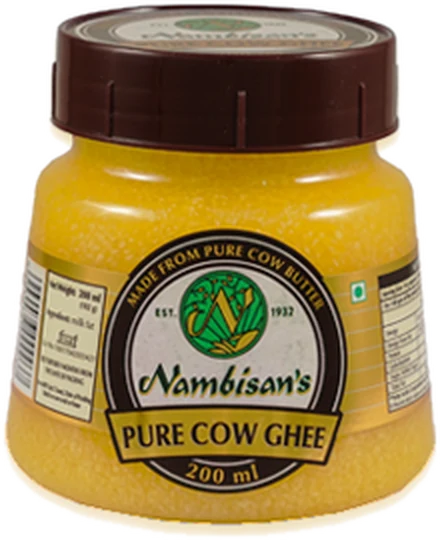 200 ml
From a 50 ml jar by the stove to a 15 litre tin for the sweet shop down the road — every pack holds exactly the same ghee.
Our most-loved jar, and the one that won the IndiaStar Award for its pack.
Four promises we keep in every batch — and can show you on the label.
Made from pure cow butter, exactly as the jar says. The ingredient list has one entry: milk fat.
Simmered slowly at our Perundurai plant, designed in Europe, where modern control protects an old recipe.
The same method across four generations of customers, served continuously since 1932.
A rich, nutty aroma and a fine natural grain that lifts every dish you cook.
Be it a ghee dosa, parathas, hot rice with dhal or festival sweets — swipe for ideas.
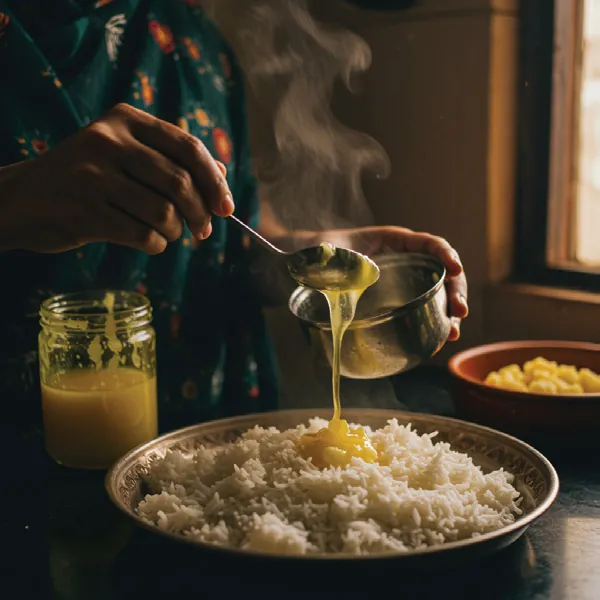
A spoonful over steaming rice is the oldest comfort food there is.

Mustard, cumin and curry leaves crackling in hot ghee — then straight over sambar or dal.
Crisp edges, golden centre, and the aroma that brings everyone to the kitchen.
Festival sweets are where ghee’s aroma matters most. Ours was made for them.
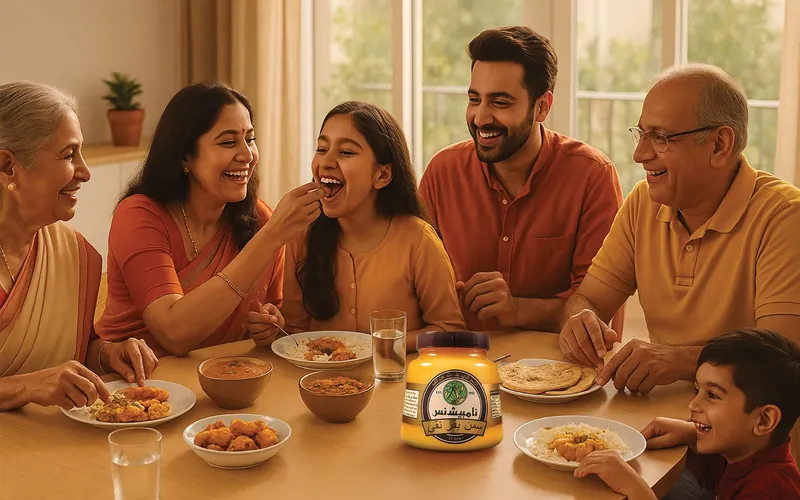
Ninety-four years of Sunday lunches, weddings and Onam sadyas.
94 years of continuous tradition. Since Mr. M.K. Nambisan began the D.V. Dairy Farm in 1932, the method has changed hands, never shape.
Read the 94-year storyPlain answers from the people who make it. If your question is not here, write to info@nambisans.in and our team will reply.
Reviewed by the Nambisan’s quality team, PerunduraiLast updated October 2026
Pure cow butter, and nothing else. The ingredient line on the jar reads simply “milk fat”. There are no added colours, flavours or preservatives; the colour and aroma come from the butter and the slow simmer.
Those fine grains are a sign of slow making. When butter is clarified gently and allowed to cool at its own pace, the fat crystallises into small, even granules — what many households call danedar ghee. Ghee that has been rushed tends to set smooth and waxy.
Keep the lid closed, use a clean, dry spoon, and store the jar in a cool place away from direct sunlight. Ghee does not need refrigeration; in a cold kitchen it will simply firm up and soften again at room temperature. Keep water out of the jar — moisture is what shortens the life of any ghee.
The best-before date is printed on every jar and is counted from the date of packing. Stored as above, the ghee keeps its aroma and texture right up to that date.
Yes. Nambisan’s is one of the few producers that works to a standardised process and carries the Agmark grade, and every pack is made under an FSSAI licence whose number is printed on the label.
At our own plant in the SIPCOT Industrial Growth Centre, Perundurai, Erode, Tamil Nadu — commissioned in 2016 and designed in Europe — from butter sourced in the milk belt of South India.
Sweet… Not Sugary
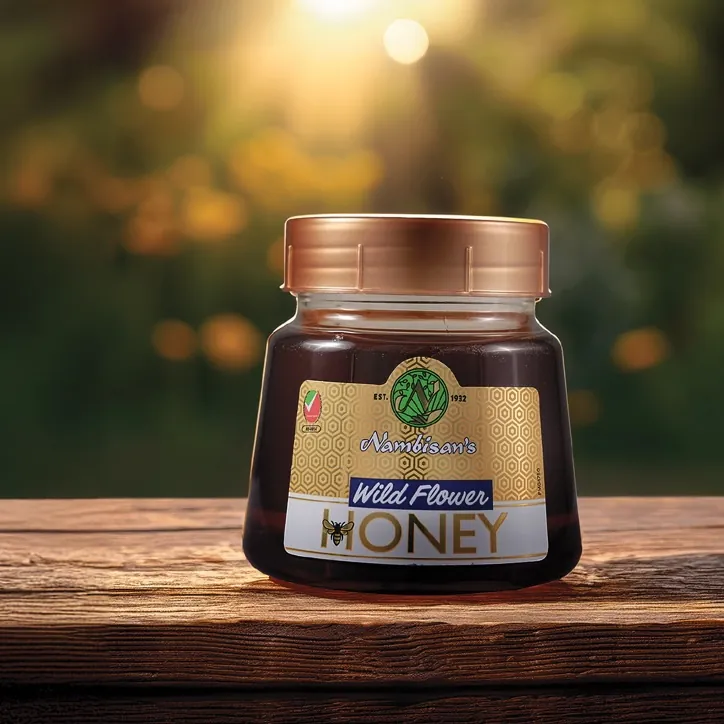
Multi-floral honey from the forests of India, free from antibiotics. The newest jar to carry our name, made to the same promise.